We hear about compounding being the driving force behind wealth growth, but how does it actually work in the markets?
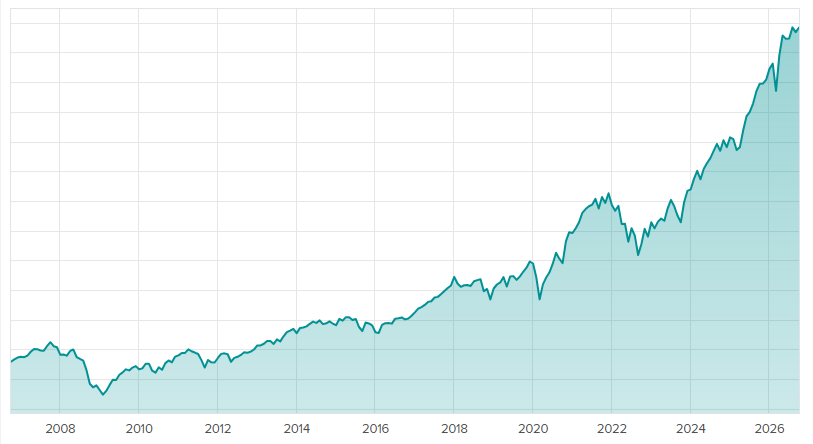
When we talk about compounding in investing, what we mean is the growth of your investment value over time. To better illustrate this, let's start with the fixed deposit example.
Fixed Deposit
Imagine you put $1000 into a fixed deposit that pays 5% a year. At the end of the year, the bank hands you $50. You now have $1050. At this point, you just earned $50 in interest. There is no compounding yet.
To kick start compounding, you have to put that $50 back into the deposit. The next year, you would earn 5% on $1050, which is $52.50. Reinvesting that $50 earned you an extra $2.50 in interest.
If you spent the $50 both years, you would have $1100 after 2 years. But by reinvesting the interest, you now have $1102.50.
| Spend the Interest | Reinvest the Interest | |||
|---|---|---|---|---|
| Year | Balance | Cash Collected | Balance | Additional Interest |
| Start | $1,000.00 | — | $1,000.00 | — |
| Year 1 | $1,000.00 | $50.00 | $1,050.00 | $0.00 |
| Year 2 | $1,000.00 | $100.00 | $1,102.50 | +$2.50 |
| Total Value | $1,100.00 | $1,102.50 | ||
Only $2.50 more? Why do we even bother?
$2.50 is just the effects of compounding over 2 years. If you remember the Compounding Orchard mini game, the effects of compounding only becomes more noticable as time passes.
See the effects of compounding over time
| Spend the Interest | Reinvest the Interest | |||
|---|---|---|---|---|
| Year | Balance | Cash Collected | Balance | Additional Interest |
| Start | $1,000.00 | — | $1,000.00 | — |
| Year 1 | $1,000.00 | $50.00 | $1,050.00 | $0.00 |
| Year 2 | $1,000.00 | $100.00 | $1,102.50 | +$2.50 |
| Total Value | $1,100.00 | $1,102.50 | ||
The market is a compounding machine
Many investments are designed to automatically reinvest their earnings:
- Growth companies use their profits to build new factories and expand.
- Accumulating funds (both index ETFs and mutual funds) quietly use cash dividends to buy more shares behind the scenes.
Because the cash never leaves the system, profits are continually reinvested into the machine. This is the underlying reason why the broader stock market tends to increase in value over time.
What are normal returns?
What normal market returns actually look like across decades, and why smooth averages hide a turbulent ride.
✨ Learn About Historical Returns